


Authored by Mohammed Al-Habib, Updated 1
Embarking on a journey through China can be an overwhelming prospect, given the vastness of this remarkable country. Each city boasts a rich history and a tangible cultural heritage, making the selection of a focal point for exploration a challenging endeavor. However, as a guest, the guidance of a host often reveals sights unseen by the ordinary traveler. In this context, let’s delve into China through Arab eyes.

Upon arrival in the capital, Beijing, the urban landscape immediately captivates with its diversity. Modern structures signaling a bright future coexist harmoniously with ancient buildings that steadfastly maintain their traditional artistic essence. The seamless transition between the present and the past invites a tactile exploration, where the roots of China unfold through its architecture and values, eagerly shared with the global community and specifically with the Arab world. This is evident in initiatives like the Belt and Road, where 21 Arab countries have engaged in partnerships, a testament to the credibility China holds in its collaborative endeavors.
Common values, preserving cultural heritage, and nurturing a contemporary civilization that aligns with sustainable aspirations characterize this relationship. From the Forbidden City to the Temple of Heaven and ancient mosques, the Great Wall of China stands as a witness to the values upheld by the Chinese people throughout time.
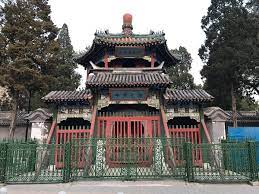
The historic Niujie Mosque stands prominently as a testament to the deep-rooted presence of Islamic culture within the Chinese societal framework. With a history spanning over a thousand years, its walls and ceilings remain faithful to their authentic principles. China consistently invests in the restoration of this mosque and other heritage landmarks, presenting China’s heritage as a shared legacy. The New Grand Mosque, as it is commonly known, serves its purpose to this day, with imams leading prayers and Friday sermons, contributing to the spiritual needs of the Muslim community. The Chinese Islamic Association oversees the care and management of over seventy mosques in Beijing alone, promoting a moderate and civilized religious discourse through quality training programs for imams across various provinces.
The distinctive architectural model of the ancient mosque in Beijing provides a spiritual impetus for its visitors. Its unique blend of Chinese civilization’s profundity with the serenity of prayer within the mosque creates an ambiance where the depth of Chinese history converges with the sanctity of Islamic worship. The open courtyards of these mosques reflect the inclusive nature of Islam and the allegiance of Chinese citizens to their state and cultural heritage.
In summary, viewing China through Arab eyes reveals a captivating narrative of cultural richness, shared heritage, and flourishing partnerships. The integration of China’s historic essence with the contemporary vision exemplifies a harmonious coexistence that resonates not only with its citizens but also with international visitors, fostering mutual understanding and appreciation.
Translated by: Dr. Hana Saada


