


India Through Algerian Lenses – Chronicle 02: Odeon Cinema, Bollywood, and an Evening in Connaught Place, Where Colonial Geometry Meets India’s Urban Pulse
Introduction to the Series: India Through Algerian Lenses
Embarking on a journey across India via Dzair Tube offers a unique perspective on a land where heritage, modernity, and human warmth coexist in extraordinary harmony. From the bustling streets of Delhi and the ceremonial Mala welcoming guests, to the city’s lively auto-rickshaws and vibrant markets, this series captures the rhythms of daily life alongside the grandeur of India’s monuments, airports, and cultural landmarks.
Beyond its heritage, India stands as a global hub of innovation, with thriving pharmaceutical industries, cutting-edge IT companies, and world-class infrastructure that reflect its rapid modernization. Through this series, Dzair Tube brings Algerian audiences closer to the sights, sounds, and emotions of India, revealing a nation of diversity, harmony, and dynamic energy, where tradition and progress move hand in hand.
Stay tuned
✍️ 𝓑𝔂: 𝓓𝓻. 𝓗𝓪𝓷𝓪 𝓢𝓪𝓪𝓭𝓪
𝓐𝓵𝓰𝓲𝓮𝓻𝓼 – 𝓙𝓪𝓷𝓾𝓪𝓻𝔂 𝟐𝟎𝟐𝟔 – As the first day in India gently folded into evening, the city of New Delhi prepared to reveal a different face—one less ceremonial, yet profoundly telling. After settling in, we set out on foot to explore Connaught Place, the historic downtown heart of the Indian capital. What unfolded was not merely a walk, but an immersion into a living urban organism where history, commerce, leisure, memory—and cinema—converge.
Connaught Place: The Circular Heart of New Delhi
Connaught Place—known locally as CP—is more than a commercial district. Designed in the early 20th century during the British colonial era, and named after Prince Arthur, the first Duke of Connaught, its distinctive circular layout, white colonnades, and Georgian architectural lines—modeled on London’s Royal Crescent in Bath—reflect imperial urban planning adapted, over time, to Indian realities.
Strategically located in Central Delhi, just about 1 km from New Delhi Railway Station and within walking distance of the iconic India Gate, Parliament House, and Janpath market, CP is today one of the most accessible and sought-after areas in Delhi NCR, ranking among the most expensive office locations in the world. Anchored by Rajiv Chowk Metro Station, one of the busiest metro hubs in the capital, CP connects effortlessly to all corners of Delhi, making it a prime starting point for both tourists and daily commuters. Today, it stands as one of the most iconic and vibrant urban centers in South Asia.
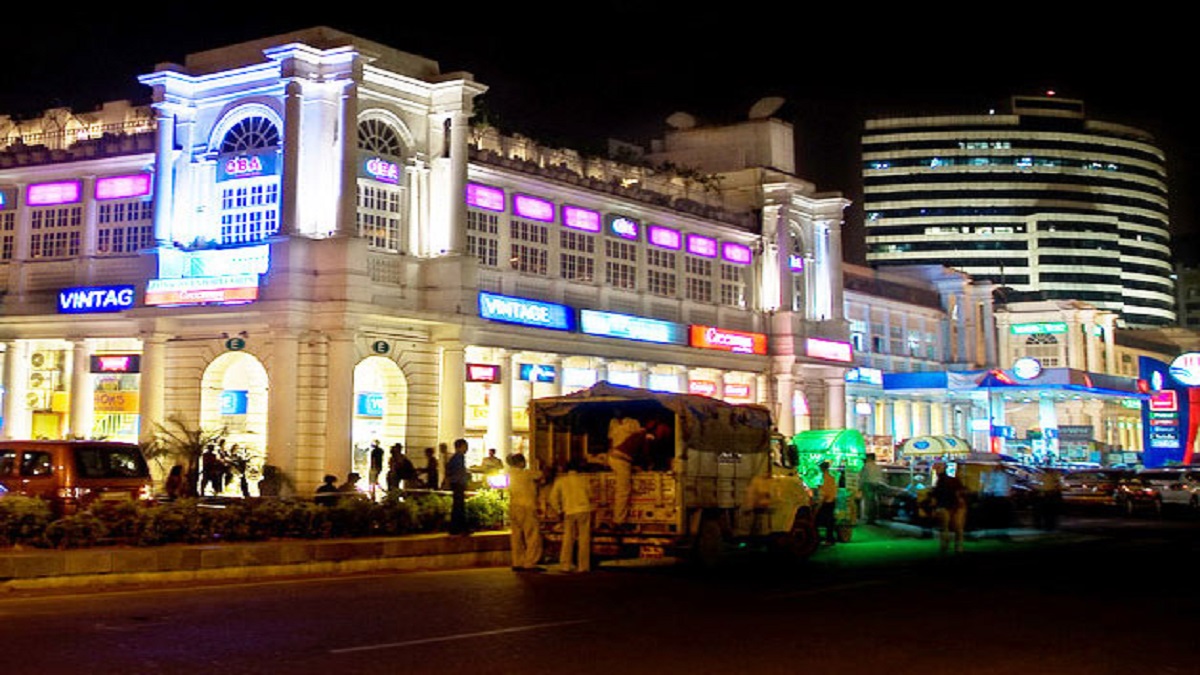
As we entered the inner circle, the atmosphere was electric yet composed. Office workers winding down after a long day mingled effortlessly with families, students, tourists, and street performers. Cafés glowed warmly under arcaded corridors, bookstores stood shoulder to shoulder with global brands, and small vendors filled the air with the scent of roasted corn, spices, and street snacks. International labels such as H&M, Levi’s, Nike, and Lacoste coexist naturally with independent shops, while iconic cultural spaces like the Oxford Bookstore offer quiet refuge amid the urban bustle. Nearby streets such as Janpath and Palika Bazaar add another layer to the experience, offering budget shopping, quirky jewelry, artisanal handicrafts, and state-run emporiums that reflect India’s rich cultural heritage. From bargaining with street vendors to browsing branded showrooms, every corner pulses with activity and color, capturing the full spectrum of Delhi life.
Sitting around the white-painted colonial buildings, watching the breathtaking sunset, or walking past youths showcasing their talents under the shade of trees—students performing Nukkad Natak, street musicians, artists sketching, or guitarists and singers entertaining passersby—CP becomes a living stage for creativity and public interaction, appreciated by large, engaged crowds. Travelers waiting at New Delhi Railway Station can easily stroll into CP, enjoy its cuisine, or order food online and continue their journey with a taste of Delhi. The space feels democratic—open, shared, and alive—holding the emotions of every visitor, whether exhausted, enthusiastic, or contemplative.
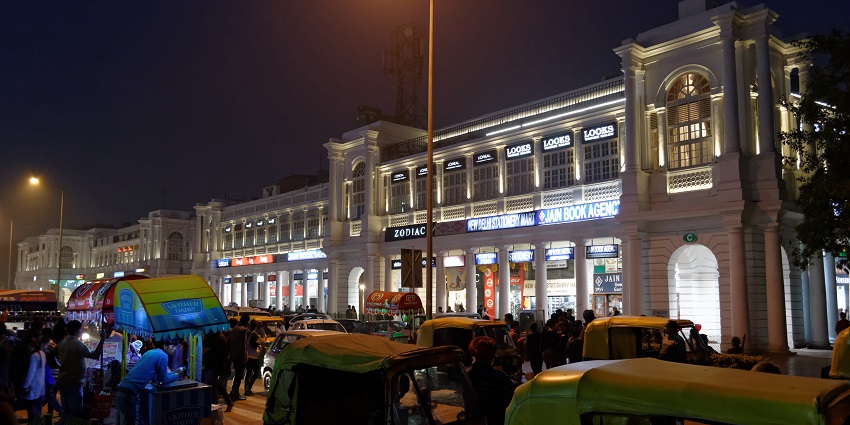
Connaught Place functions as a social equalizer. Here, luxury boutiques and modest eateries coexist without friction—historic institutions like United Coffee House, Kwality, and Khan Chacha sharing space with contemporary cafés and fast-food franchises like Burger King, where light meals offer a refreshing pause for hungry visitors. The area’s culinary landscape extends from refined dining to vibrant street food, where aloo chaat, gol gappe, and other local snacks are enjoyed standing shoulder to shoulder. Evening transforms CP further as its vibrant nightlife awakens: bars and pubs like Odeon Social, Lord of the Drinks, and My Bar offer music, drinks, and entertainment, while iconic landmarks such as Odeon Cinema and the serene Bangla Sahib Gurudwara add depth, culture, and a contemplative calm to the urban rhythm. Visiting the Gurudwara offers a meditative pause, with its lake, hymns, langar, and sacred atmosphere contributing to the diversity of experiences within CP.

The circular geometry itself seems symbolic: no sharp edges, no hierarchy—only continuous movement. From the busiest official morning to the soothing evening, Connaught Place embodies Delhi’s pulse, where every street corner, every block, every vendor, and every performer contributes to a space that is not just commercial or historical, but social, cultural, and deeply human. It is a place where Delhi breathes publicly.

An Urban Dialogue Between Past and Present
Walking through CP at dusk, one senses the dialogue between eras. Colonial façades remain intact, yet their meanings have been repurposed. What was once an imperial commercial hub now serves as a postcolonial civic space shaped by Indian agency. Neon signs glow beneath century-old arches; global cinema posters hang beside local political notices; English and Hindi flow together in casual conversation.
This layering of time is not chaotic—it is organic. Connaught Place does not erase its past; it absorbs it. And in doing so, it reflects a broader Indian philosophy: continuity without stagnation, change without rupture.

Odeon Cinema: Watching Bollywood Where Collective Memory Lives
At the heart of the evening stood Odeon Cinema, one of New Delhi’s most historic and beloved cinema halls. Located prominently within Connaught Place, Odeon is not merely a venue for film screenings—it is a cultural landmark.

Situated in D‑Block, Connaught Place, Odeon Cinema lies at the very center of the capital’s historic commercial and entertainment hub, making it a natural gathering place for Delhiites and visitors alike.
Built in 1945, Odeon was among the early cinema halls in Connaught Place, emerging during a period when the area was transforming into a cosmopolitan cultural centre in the 1930s and 1940s. As talkies (sound films) gained popularity across India, Odeon, alongside theatres like Regal, Rivoli, and Plaza, helped cement CP’s reputation as a cinema destination. In its early decades, Odeon stood out technologically as one of the first venues in Delhi to feature a 70 mm screen, second only to Sheila Cinema in Paharganj, signaling a commitment to premium cinematic experiences.
For generations, Odeon has been more than a cinema hall—it has functioned as a social landmark where people gathered for the latest films, events, and cultural activities. Originally coexisting with stage shows and other arts performances, it eventually focused primarily on films, reflecting evolving entertainment preferences in Delhi. Its central location made it a favourite for locals, travelers, and cultural enthusiasts alike, embedding it deeply in the city’s collective memory.
In recent years, the classic single-screen Odeon underwent refurbishment and relaunched as Odeon INOX, operated by the INOX multiplex group. The contemporary setup features two modern auditoria with around 592 seats, premium sofa options, and state-of-the-art sound and projection systems, including Dolby Atmos. Its interiors combine the heritage charm of the original theatre with modern comforts, delivering a cinematic experience that bridges legacy and contemporary expectations.
For many Delhi residents, Odeon represents a lived memory of cinema-going in the capital, from golden-age classics to today’s blockbuster releases. Its transformation into a multiplex reflects broader trends across India, where historic theatres adapt to changing audiences while striving to preserve cultural and architectural heritage. In Connaught Place, Odeon remains a symbol of enduring cinema culture, capturing both nostalgia and modernity in one iconic venue.
That evening, we went to watch one of the latest Bollywood releases, surrounded by a packed audience that spanned generations. The experience itself was revelatory. The cinema hall vibrated with collective emotion—laughter erupted spontaneously, dramatic moments were met with audible reactions, and musical sequences were received almost ceremonially.
Entering Odeon felt like stepping into shared memory. For decades, this cinema has hosted generations of Delhiites—first dates, family outings, political documentaries, Bollywood blockbusters, and international films alike. Its architecture, while modernized, retains the dignity of classic cinema halls, where film was once an event rather than a disposable product.
Cinema here is not solitary consumption; it is a communal ritual. People discuss scenes openly, respond emotionally without restraint, and exit the screening already debating meanings, morals, and messages. Film in India is dialogue—between screen and society.
Bollywood: A Civilizational Cinema and a Social Mirror
To understand India, one must understand Bollywood—not as an industry alone, but as a civilizational language. Much like India itself, Bollywood is expansive, emotionally charged, plural, and resistant to simplification. It is at once spectacle and confession, fantasy and social commentary, tradition and reinvention.
The very name Bollywood—a linguistic fusion of Bombay (now Mumbai) and Hollywood—emerged in the 1970s, symbolizing India’s confident appropriation of a global form into a distinctly local expression. Yet the roots of Indian cinema run far deeper. As early as 1896, the Lumière brothers introduced cinematography to Bombay, planting the seeds of what would become one of the world’s most prolific cinematic traditions. In 1913, Dadasaheb Phalke, revered as the father of Indian cinema, directed Raja Harishchandra, the first full-length Indian feature film. With Alam Ara in 1931—the first Indian sound film—cinema in India found its most defining element: music.
From its inception, Bollywood refused silence. Songs were not ornamental; they were narrative, emotional, and symbolic. Early films like Indra Sabha (1932), with its astonishing 69 songs, established a cinematic grammar in which music became inseparable from storytelling. This remains true today. Bollywood films are not merely watched; they are heard, sung, danced, and remembered.
An Industry of Astonishing Scale
In 2025, Bollywood stands as the largest film industry in the world in terms of production, releasing over 2,000 films annually, far surpassing Hollywood. With budgets reaching 400 crores of rupees for major blockbusters and a national network exceeding 13,000 cinema screens, the industry commands both economic power and cultural authority.

Mumbai remains the beating heart of this universe, but Bollywood’s reach is global. Indian diasporas, streaming platforms, and international festivals have transformed Hindi cinema into a transnational force. Films such as Chhaava—the highest-grossing film of 2025 with nearly 800 crores in worldwide revenue—illustrate not only commercial success, but emotional resonance across borders.
Yet numbers alone do not explain Bollywood’s endurance. Its true strength lies in its intergenerational appeal. Children, parents, and grandparents share cinematic references; films become common cultural memory. Bollywood does not fragment audiences—it unites them.
Masala Cinema: A Philosophy of Wholeness
At the heart of Bollywood lies the masala formula—a deliberate blending of genres: action, romance, comedy, drama, moral struggle, and music. Often misunderstood by external observers as excess, masala cinema is in fact a reflection of an Indian worldview in which life itself is composite.
Indian society does not compartmentalize emotion. Joy and sorrow, comedy and tragedy, coexist. Bollywood mirrors this emotional simultaneity. The heroic figure is larger than life yet morally anchored; the antagonist is clearly defined; the female protagonist oscillates between strength, sacrifice, glamour, and resilience. These archetypes evolve, yet remain emotionally legible.
What Western cinema often subdues, Bollywood amplifies: emotion as collective experience.
Cinema as Social Commentary
Far from escapism alone, Bollywood has long served as a mirror of Indian society. Films such as Mother India (1957) articulated rural struggle and moral dignity in post-independence India. Later works like Three Idiots challenged educational pressure and conformity. In recent decades, a “New Wave” within Bollywood has emerged—films that engage directly with contemporary realities: urban alienation and generational conflict. This evolution does not abandon spectacle; it retools it.
Even the dominance of sequels and franchises in 2025 reflects a globalized cinematic economy—yet Bollywood continues to negotiate between commerce and conscience.
Music and Dance: The Soul of Bollywood
Music is not an accessory in Bollywood—it is its beating heart. Songs escape the screen to become national anthems, wedding rituals, protest chants, and intimate confessions. Lyrics, choreography, and emotion are meticulously synchronized.
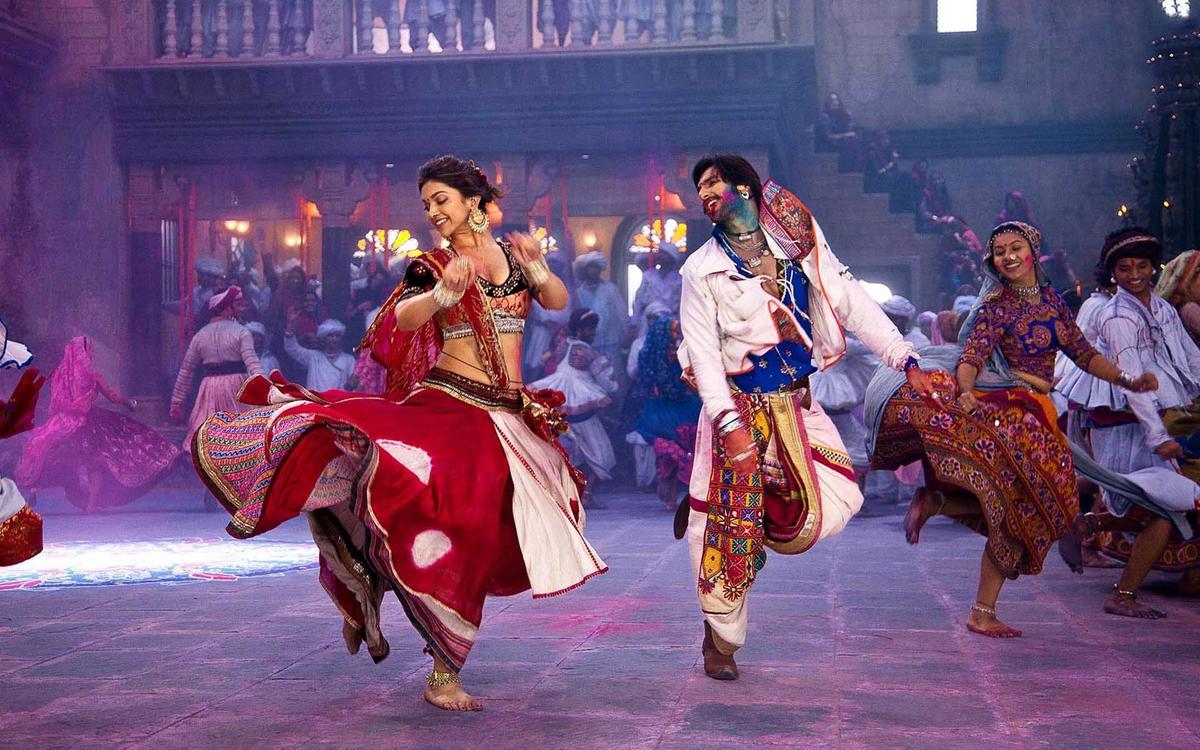
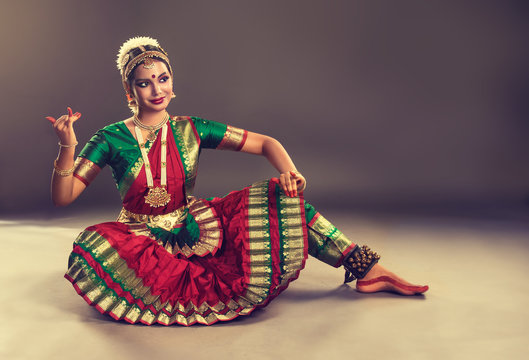
Bollywood dance itself is a cultural palimpsest. Rooted in classical traditions such as Bharatanatyam and Kathak, enriched by folk dances like Bhangra and Garba, and later infused with jazz, hip-hop, salsa, and contemporary styles, it embodies India’s capacity for synthesis.
With over 108 mudras—symbolic hand gestures—and expressive facial language, Bollywood dance tells stories as much as it decorates them. Sometimes entire narrative arcs unfold within choreography alone. Dance becomes speech.
Icons, Stars, and Collective Identity
Bollywood stars are not merely celebrities; they are social institutions. Figures such as Amitabh Bachchan, Shah Rukh Khan, drashti Dhami, and Aamir Khan transcend cinema to become moral references, cultural ambassadors, and generational anchors. Actresses like Aishwarya Rai, Priyanka Chopra, and Alia Bhatt reflect shifting ideals of femininity, ambition, and agency.


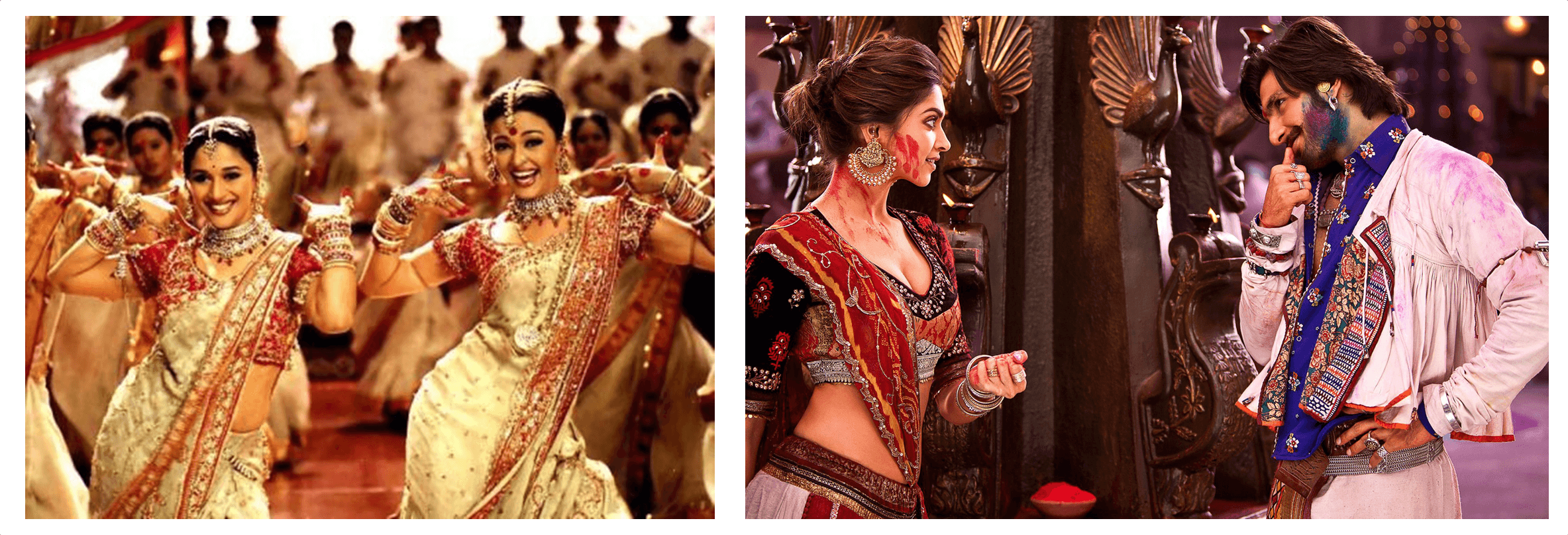
Dancers and choreographers—Helen, Madhuri Dixit, Hrithik Roshan, Prabhu Deva, Farah Khan—have shaped the physical vocabulary of Indian popular culture. Their movements live far beyond the screen, reproduced at festivals, weddings, and global dance studios.
Odeon Cinema Revisited: Bollywood Lived, Not Watched
Watching a contemporary Bollywood film at Odeon Cinema was therefore not an anecdote—it was immersion. The audience’s reactions transformed the screening into a shared ritual. Applause erupted; emotional scenes were met with collective silence.
In that moment, cinema ceased to be representation. It became participation.
Bollywood does not merely reflect Indian society—it binds it, offering continuity in a nation of immense diversity. It preserves memory while absorbing change, much like Connaught Place itself.
Public Space, Security, and Urban Confidence
Back in Connaught Place, as Algerians walking freely through downtown New Delhi late in the evening, we were particularly attentive to the atmosphere of safety and organization. The area was well-lit, visibly policed yet unobtrusive, and remarkably inclusive. Women, families, and young people occupied the space with confidence—sitting on steps, strolling in groups, or simply observing the city’s rhythm.
This sense of urban confidence did not stem from control, but from presence—presence of people, of institutions, of shared norms. Public space here is not abandoned after dark; it is reclaimed.
What made the evening especially memorable were the spontaneous human interactions. Shopkeepers greeted passersby warmly, café staff engaged in friendly exchanges, and strangers struck up conversations without hesitation. When we mentioned Algeria, curiosity followed—questions, smiles, genuine interest.
Once again, we felt less like mere visitors and more like engaged participants—a sensation heightened by the impeccable guidance of Mr. Namish Sharma and Mr. Luvish Singh Guleria of Shagul Travels PVT. LTD. Throughout our ten-day journey, they accompanied us at every step, orchestrating each element of our itinerary with precision and foresight. Their professionalism, extensive experience in hosting international travelers, and genuine warmth brought every street, landmark, and historical anecdote vividly to life. Through their insightful commentary, the city revealed itself not as a distant spectacle but as a living, breathing entity—its rhythms, stories, and nuances made fully accessible.
By the time we concluded our walk, one realization was unmistakable: Connaught Place, amplified by cinema and Bollywood, is India in miniature. Diverse yet cohesive. Historic yet modern. Loud yet humane.
From the colonial arches of CP to the emotional intensity of Odeon Cinema, the evening offered more than scenery—it offered insight. Insight into how a civilization lives with its history, negotiates its present, and tells its stories collectively.
As we returned that night, Delhi no longer felt vast or overwhelming.
It felt familiar.
And this, we understood, was only the second chapter.
To be continued.
For those who missed it, you can read the first installment of this series here: https://www.dzair-tube.dz/en/india-through-algerian-lenses-chronicle-01-from-algiers-to-delhi-a-warm-welcome-in-the-heart-of-india-with-fascinating-airport-mala-and-the-rhythms-of-auto-rickshaws/
— 𝐄𝐍𝐃 —

📡🌍 | 𝓐𝓫𝓸𝓾𝓽 𝓓𝔃𝓪𝓲𝓻 𝓣𝓾𝓫𝓮 𝓜𝓮𝓭𝓲𝓪 𝓖𝓻𝓸𝓾𝓹 | 🌍📡
━━━━━━━━━━━━━━━━━━━━━━━━━━━━━━━
📰 𝓓𝔃𝓪𝓲𝓻 𝓣𝓾𝓫𝓮 𝓲𝓼 𝓪 𝓽𝓻𝓪𝓲𝓵𝓫𝓵𝓪𝔃𝓮𝓻 𝓲𝓷 𝓐𝓵𝓰𝓮𝓻𝓲𝓪𝓷 𝓭𝓲𝓰𝓲𝓽𝓪𝓵 𝓳𝓸𝓾𝓻𝓷𝓪𝓵𝓲𝓼𝓶, 𝓭𝓮𝓵𝓲𝓿𝓮𝓻𝓲𝓷𝓰 𝓱𝓲𝓰𝓱-𝓺𝓾𝓪𝓵𝓲𝓽𝔂 𝓬𝓸𝓷𝓽𝓮𝓷𝓽 𝓲𝓷 𝓐𝓻𝓪𝓫𝓲𝓬, 𝓕𝓻𝓮𝓷𝓬𝓱, 𝓪𝓷𝓭 𝓔𝓷𝓰𝓵𝓲𝓼𝓱. 𝓦𝓲𝓽𝓱 𝓶𝓸𝓻𝓮 𝓽𝓱𝓪𝓷 📈 500,000 𝓭𝓪𝓲𝓵𝔂 𝓬𝓵𝓲𝓬𝓴𝓼, 𝓲𝓽 𝓻𝓪𝓷𝓴𝓼 𝓪𝓶𝓸𝓷𝓰 𝓽𝓱𝓮 𝓶𝓸𝓼𝓽 𝓲𝓷𝓯𝓵𝓾𝓮𝓷𝓽𝓲𝓪𝓵 𝓶𝓮𝓭𝓲𝓪 𝓹𝓵𝓪𝓽𝓯𝓸𝓻𝓶𝓼 𝓲𝓷 𝓽𝓱𝓮 𝓬𝓸𝓾𝓷𝓽𝓻𝔂.🏆 𝓐𝔀𝓪𝓻𝓭𝓮𝓭 𝓽𝓱𝓮 𝓟𝓻𝓮𝓼𝓲𝓭𝓮𝓷𝓽 𝓸𝓯 𝓽𝓱𝓮 𝓡𝓮𝓹𝓾𝓫𝓵𝓲𝓬’𝓼 𝓟𝓻𝓲𝔃𝓮 𝓯𝓸𝓻 𝓟𝓻𝓸𝓯𝓮𝓼𝓼𝓲𝓸𝓷𝓪𝓵 𝓙𝓸𝓾𝓻𝓷𝓪𝓵𝓲𝓼𝓽 𝓲𝓷 𝓽𝓱𝓮 𝓔𝓵𝓮𝓬𝓽𝓻𝓸𝓷𝓲𝓬 𝓟𝓻𝓮𝓼𝓼 𝓬𝓪𝓽𝓮𝓰𝓸𝓻𝔂 (🗓 𝓞𝓬𝓽𝓸𝓫𝓮𝓻 22, 2022), 𝓓𝔃𝓪𝓲𝓻 𝓣𝓾𝓫𝓮 𝓲𝓼 𝔀𝓲𝓭𝓮𝓵𝔂 𝓻𝓮𝓬𝓸𝓰𝓷𝓲𝔃𝓮𝓭 𝓯𝓸𝓻 𝓲𝓽𝓼 𝓮𝓭𝓲𝓽𝓸𝓻𝓲𝓪𝓵 𝓮𝔁𝓬𝓮𝓵𝓵𝓮𝓷𝓬𝓮 𝓪𝓷𝓭 𝓲𝓷𝓽𝓮𝓰𝓻𝓲𝓽𝔂.
📱 𝓜𝓪𝓼𝓼𝓲𝓿𝓮 𝓓𝓲𝓰𝓲𝓽𝓪𝓵 𝓡𝓮𝓪𝓬𝓱:
🔴 600,000+ 𝓨𝓸𝓾𝓣𝓾𝓫𝓮 𝓼𝓾𝓫𝓼𝓬𝓻𝓲𝓫𝓮𝓻𝓼
🔵 6 𝓶𝓲𝓵𝓵𝓲𝓸𝓷+ 𝓯𝓸𝓵𝓵𝓸𝔀𝓮𝓻𝓼 𝓪𝓬𝓻𝓸𝓼𝓼 𝓕𝓪𝓬𝓮𝓫𝓸𝓸𝓴 𝓹𝓪𝓰𝓮𝓼
📸 70,000+ 𝓘𝓷𝓼𝓽𝓪𝓰𝓻𝓪𝓶 𝓯𝓸𝓵𝓵𝓸𝔀𝓮𝓻𝓼🎥 𝓞𝓹𝓮𝓻𝓪𝓽𝓲𝓷𝓰 𝓯𝓻𝓸𝓶 𝓼𝓽𝓪𝓽𝓮-𝓸𝓯-𝓽𝓱𝓮-𝓪𝓻𝓽 𝓼𝓽𝓾𝓭𝓲𝓸𝓼, 𝓓𝔃𝓪𝓲𝓻 𝓣𝓾𝓫𝓮 𝓫𝓻𝓸𝓪𝓭𝓬𝓪𝓼𝓽𝓼 𝓻𝓲𝓬𝓱 𝓪𝓷𝓭 𝓭𝓲𝓿𝓮𝓻𝓼𝓮 𝓹𝓻𝓸𝓰𝓻𝓪𝓶𝓶𝓲𝓷𝓰, 𝓲𝓷𝓬𝓵𝓾𝓭𝓲𝓷𝓰:
🗞 𝓝𝓮𝔀𝓼 | ⚽ 𝓢𝓹𝓸𝓻𝓽𝓼 | 🎭 𝓔𝓷𝓽𝓮𝓻𝓽𝓪𝓲𝓷𝓶𝓮𝓷𝓽 | 🕌 𝓡𝓮𝓵𝓲𝓰𝓲𝓸𝓷 | 🎨 𝓒𝓾𝓵𝓽𝓾𝓻𝓮🗣️ 𝓕𝓮𝓪𝓽𝓾𝓻𝓲𝓷𝓰 𝓲𝓷𝓽𝓮𝓻𝓪𝓬𝓽𝓲𝓿𝓮 𝓽𝓪𝓵𝓴 𝓼𝓱𝓸𝔀𝓼 𝓪𝓷𝓭 𝓮𝔁𝓬𝓵𝓾𝓼𝓲𝓿𝓮 𝓲𝓷𝓽𝓮𝓻𝓿𝓲𝓮𝔀𝓼 𝔀𝓲𝓽𝓱 𝓹𝓻𝓸𝓶𝓲𝓷𝓮𝓷𝓽 𝓯𝓲𝓰𝓾𝓻𝓮𝓼 𝓯𝓻𝓸𝓶 𝓹𝓸𝓵𝓲𝓽𝓲𝓬𝓼, 𝓫𝓾𝓼𝓲𝓷𝓮𝓼𝓼, 𝓪𝓻𝓽𝓼, 𝓪𝓷𝓭 𝓶𝓸𝓻𝓮, 𝓓𝔃𝓪𝓲𝓻 𝓣𝓾𝓫𝓮 𝓼𝓮𝓻𝓿𝓮𝓼 𝓪𝓼 𝓪 𝓴𝓮𝔂 𝓹𝓵𝓪𝓽𝓯𝓸𝓻𝓶 𝓯𝓸𝓻 𝓹𝓾𝓫𝓵𝓲𝓬 𝓭𝓲𝓼𝓬𝓸𝓾𝓻𝓼𝓮 𝓪𝓷𝓭 𝓬𝓲𝓿𝓲𝓬 𝓮𝓷𝓰𝓪𝓰𝓮𝓶𝓮𝓷𝓽.
📰 𝓘𝓽𝓼 𝓹𝓻𝓲𝓷𝓽 𝓼𝓹𝓸𝓻𝓽𝓼 𝓭𝓪𝓲𝓵𝔂, “𝓓𝔃𝓪𝓲𝓻 𝓢𝓹𝓸𝓻𝓽,” 𝓮𝓷𝓳𝓸𝔂𝓼 𝓸𝓿𝓮𝓻 50,000 𝓭𝓪𝓲𝓵𝔂 𝓭𝓸𝔀𝓷𝓵𝓸𝓪𝓭𝓼 𝓿𝓲𝓪 𝓽𝓱𝓮 𝓸𝓯𝓯𝓲𝓬𝓲𝓪𝓵 𝔀𝓮𝓫𝓼𝓲𝓽𝓮—𝓯𝓾𝓻𝓽𝓱𝓮𝓻 𝓬𝓮𝓶𝓮𝓷𝓽𝓲𝓷𝓰 𝓽𝓱𝓮 𝓹𝓵𝓪𝓽𝓯𝓸𝓻𝓶’𝓼 𝓶𝓾𝓵𝓽𝓲𝓶𝓮𝓭𝓲𝓪 𝓵𝓮𝓪𝓭𝓮𝓻𝓼𝓱𝓲𝓹.
🎖️ 𝓗𝓸𝓷𝓸𝓻𝓮𝓭 𝔀𝓲𝓽𝓱 𝓽𝓱𝓮 𝓜𝓮𝓭𝓲𝓪 𝓛𝓮𝓪𝓭𝓮𝓻𝓼𝓱𝓲𝓹 𝓐𝔀𝓪𝓻𝓭 𝓫𝔂 𝓽𝓱𝓮 𝓯𝓸𝓻𝓶𝓮𝓻 𝓜𝓲𝓷𝓲𝓼𝓽𝓮𝓻 𝓸𝓯 𝓒𝓸𝓶𝓶𝓾𝓷𝓲𝓬𝓪𝓽𝓲𝓸𝓷, 𝓜𝓸𝓱𝓪𝓶𝓮𝓭 𝓛𝓪â𝓰𝓪𝓫, 𝓪𝓷𝓭 𝓬𝓮𝓵𝓮𝓫𝓻𝓪𝓽𝓮𝓭 𝓪𝓽 𝓽𝓱𝓮 𝓗𝓲𝓵𝓪𝓵𝓼 𝓸𝓯 𝓽𝓱𝓮 𝓣𝓮𝓵𝓮𝓿𝓲𝓼𝓲𝓸𝓷 𝓪𝔀𝓪𝓻𝓭𝓼, 𝓓𝔃𝓪𝓲𝓻 𝓣𝓾𝓫𝓮 𝓬𝓸𝓷𝓽𝓲𝓷𝓾𝓮𝓼 𝓽𝓸 𝓵𝓮𝓪𝓭 𝔀𝓲𝓽𝓱 𝓲𝓷𝓷𝓸𝓿𝓪𝓽𝓲𝓸𝓷, 𝓲𝓷𝓯𝓵𝓾𝓮𝓷𝓬𝓮, 𝓪𝓷𝓭 𝓲𝓶𝓹𝓪𝓬𝓽.
━━━━━━━━━━━━━━━━━━━━━━━━━━━━━━━
🌐 𝓢𝓽𝓪𝔂 𝓒𝓸𝓷𝓷𝓮𝓬𝓽𝓮𝓭:
🔗 𝓦𝓮𝓫𝓼𝓲𝓽𝓮: www.dzair-tube.dz
🔗 𝓔𝓷𝓰𝓵𝓲𝓼𝓱: www.dzair-tube.dz/en
📲 𝓕𝓸𝓵𝓵𝓸𝔀 𝓾𝓼 𝓸𝓷 𝓕𝓪𝓬𝓮𝓫𝓸𝓸𝓴 | 𝓘𝓷𝓼𝓽𝓪𝓰𝓻𝓪𝓶 | 𝓨𝓸𝓾𝓣𝓾𝓫𝓮
━━━━━━━━━━━━━━━━━━━━━━━━━━━━━━━


