


Ramadan Traditions Worldwide: Spotlight on Algeria’s Southern Provinces Gatherings| Dzair Tube Ramadan Series (05)
✍️ 𝓑𝔂: 𝓓𝓻. 𝓗𝓪𝓷𝓪 𝓢𝓪𝓪𝓭𝓪

The inhabitants of Touat (Adrar province) reconnect for Suhor with the advent of each month of Ramadan, with “Tekerkeba”, a rite jealously preserved.
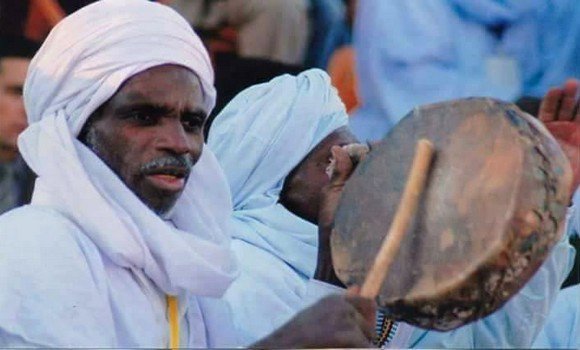
As part of Ramadan atmosphere and bequeathed from one generation to another, Tekerkeba, named after a large drum covered with an animal skin, has become the name attributed to the mission of the person, a volunteer, responsible for awakening the inhabitants for the Ramadan rite of “S’hour” (meal before the resumption of fasting).
This instrument is used, by its strong sonorities produced by the blows of stick, which can be heard from very far, to awaken the inhabitants and extirpate them from their deep sleep to prepare, through the “S’hour”, for a new day of fasting. The person who wakes people up for this light meal is is called “Ba” which means “My father”.
Having won the trust of the local population to take over from this very old profession, Ba gets up before dawn, armed with his drum to go through the streets and alleys of the city, sound his drum awakening people for the meal of S’hour.
A few nights before the closing of the month of Ramadan, Ba, inserts other expressions announcing the close end of the holy month, and receives at the dawn of the day of Eid El-Fitr gifts from the residents, including dates, semolina and other products, as a reward for his efforts and missions in the service of the community and its religion.
For the southern province of Tamanrasset, evenings and convivial gatherings, known as “Gaâda”, are among the traditions preserved and revived by the local population during Ramadan.
Very attached to its habits and customs, the local population reconnects with groups within the family, and neighbors, in search of pleasant moments and the exchange of conversations about everything and nothing.
Usually, Ramadan evenings are spent, in the Sahara, outside with friends and neighbors, often in the courtyards adjoining the fireplaces or on the terraces.
The preparation of this Gaâda (convivial meeting) being a means of consolidating social ties, is initiated before Iftar by the preparation of the utensils and ingredients necessary for the tea ritual, essential, for “waking up the fasting people “.
A brazier, charcoal or pieces of wood, makeshift utensils, often already disfigured by the fire of the braziers, and the ingredients (tea, sugar and mint) are enough to bring together the members of the family, bound to the ritual of three glasses of tea, the second and third of which are enhanced by the pleasant flavor of spearmint.
In Tamanrasset, tea is served three times in the same evening: after the Iftar meal, after that of the evening, and, for some, with the Shour meal.
We cannot talk about the Sahara without mentioning the province of Ghardaïa, chief town of the Mʾzab Oasis, north-central Algeria, and created in the 10th century and inhabited by the Ibadites.
The month of Ramadan has a special flavor in the Ghardaïa region thanks to the immortal ancient traditions which strengthen social cohesion, solidarity, sharing and generosity.
The Ghardaoui population, in all its diversity, preserves ancient rituals well kept through the centuries. Traditional local dishes whose recipes are passed down from mother to daughter are offered at each celebration, including the eve of the tenth day, the night of mid-Ramadan and the night of destiny (27th day). Families ensure that each of these nights is marked differently from the others of this holy month, by offering hearty dishes, whose preparation recipes, ingredients and aromas are jealously guarded.
The night of the tenth day of Ramadan is characterized by the preparation of Baghrir (pancakes) with honey, the night of mid-Ramadan by a couscous garnished with camel meat, while the night of the 27th day of Ramadan is celebrated by the preparation of “Chekhchoukha drizzled with date sauce”.
According to tradition, these appetizing dishes are distributed to passers-by and friends and are exchanged between families from different neighborhoods. Night visits between relatives, neighbors, families and friends throughout the month of Ramadan are frequent. In the different Ksours (Palaces) of Ghardaia, the doors of houses remain open to welcome guests, making this month an opportunity to propagate the values of sharing, solidarity and family reunification in an atmosphere imbued with spirituality and conviviality.
In addition to social interaction, the Ghardaoui families also encourage their children to fast, by offering them small gifts and preparing “Arfis” dish for the occasion.
Like the various regions of the country, the mosques register a record influx of worshippers with the traditional dress “Gandoura”, with a view to highlighting the talent and the know-how of the artisans of the region.
Among the other religious traditions perpetuated during this holy month, the reciting, as of the eve of Ramadan, of the verses of the Holy Quran, in groups throughout the month without interruption (day and night) except during the five daily prayers, in the various mosques. Once all the verses of the Holy Quran are recited, they start again”. Religious conferences are, also, organized by specialists each night.
In the Southern province of Laghouat, Leïlat El-Kadr (Night of Destiny) represents a landmark in the calendar of rites and customs of the people of Laghouat who strive to perpetuate them to cement social ties.
This religious occasion cannot go unnoticed by the Laghouatis who, very attached to their traditions, take advantage of this night to strengthen the aspects of solidarity and mutual aid, anchor the precepts of Islam among the rising generations, organize, through charitable and voluntary associations, collective circumcision campaigns of children in a friendly atmosphere.
Many inhabitants of Laghouat are, also, attached, on this night, to the organization of a collective “Iftar”, followed by the group reciting of the Holy Quran, punctuated by the implorations of Allah to bestow his holy mercy upon the late relatives.
These acts of charity are accompanied, in the southern part of the province, by a tradition through which children are given the opportunity to invite their friends to Iftar meals, to anchor in them, from an early age, the sense of sharing.
These ancestral practices during the month of Ramadan are added to the traditional convivial family evenings and gatherings between neighbors and friends around a tea table decorated with traditional cakes, and a refreshing local drink called “Gatâa El-Berd”.
The young people of the region, for their part, carry out charitable activities and solidarity actions, like the organization, on this night of the 27th of the month of Ramadan, of parties and receptions in honor of the winners of the various school exams and competitions.
The oldest people, for their part, opt for the organization of social events, like; settling disputes, in the climate of fervor and serenity with a view to consolidating social cohesion.
Delving in the depth of the Algerian desert, we come across a Berber ethnic group; the Tuareg people.
To liven up the evenings, in this eagerly-awaited month of fasting, qualified as “the Month of Baraka (blessing), abundance and fervor,” the Targui population of the Illizi region draws the best of cultural and religious heritage.
Indeed, the Tuareg pay meticulous attention to this blessed month, illustrated in the hygiene activities, the decoration of tents, and travel to the nearest urban centers to stock up on essential foodstuffs for the preparation of the Iftar.
Nomads, for their part, immolate sheep, an act described as “a sacrifice of auspiciousness for this month of the Holy Quran.»
The Meïda of Ftour (dining table) is filled with dates, milk and soup intended to break the fast. Back from the Tarawih prayers, the families sit down to taste a couscous garnished with Keddid (dried meat).
After dinner, the men gather around tea before chanting religious songs, known as Khoumaïssa, praising Islam and Prophet Muhammad (Salla Allahu Alaihi wa Sallam) and reciting The Holy Quran.
Friendly visits, during which various current affairs and social and religious issues are tackled, are, also, on the menu of the Saharat (evenings) of this holy month, at the end of which, the Tuareg, observe the movement of the stars marking the S’hour time.
Concluding with the province of Bechar in the southwestern region of Algeria, where families uphold ancient customs and traditions, including the observance of the “Fadila” night, celebrated on the fifteenth day of Ramadan. During this special night, families strive to make it distinct from other days of the holy month, reminiscent of the blessed Night of Decree.
A prominent aspect of the festivities on the fifteenth day is the tradition of “Al-Ouaziaa,” where a sacrificial animal is slaughtered, and its meat is evenly distributed among several families who participated in purchasing the animal. This distribution aims to commemorate the midpoint of Ramadan and foster solidarity among families, including those in need who receive a significant portion of the meat.
Despite becoming less common in urban areas of the province due to improved financial conditions, these traditions remain deeply rooted in rural communities, driven by various social and cultural factors.
Additionally, families continue to share and exchange dishes as a means of strengthening neighborhood bonds during this blessed month. Ramadan is also marked by numerous acts of solidarity, with associations and individuals providing hot meals to the needy and travelers passing through the region, through “Al-Rahma” restaurants, funded by the Algerian government along with the generous donors as a symbol of solidarity with the less fortunate, in accordance with Islamic teachings.
Similar to other regions across the country, mosques in Bechar witness a significant influx of worshippers during Ramadan. Besides performing the five daily prayers and Tarawih prayers, worshippers attend a series of lectures on various topics related to deepening knowledge about Sunni Islam, particularly the Maliki school of thought.
Despite urban and civilizational developments in the Bechar region, Ramadan traditions have remained largely unchanged, particularly in the realm of culinary practices. Traditional dishes, such as Harira (wheat or barley soup), couscous with mallow, and various meat or poultry-based dishes with sweet flavors, alongside a variety of desserts served with tea and mint, continue to be prepared and enjoyed during this holy month.
Furthermore, Ramadan is a time when fruit and vegetable markets thrive during the day. The evenings also witness a significant turnout in cafes after Tarawih prayers, where people enjoy various beverages, engage in discussions about daily affairs, and indulge in S’hour (a late-night meal), typically consisting of couscous topped with a thin sauce, along with tea, coffee, or milk.
Throughout the final week of Ramadan, families often visit clothing markets after Tarawih prayers to purchase new clothes for their children, taking advantage of enticing discounts offered by specialized commercial centers.
Despite these vivid Ramadan scenes, there is a noticeable absence of the traditional “Dn-Dn” drum, which used to announce the S’hour mealtime in the not-so-distant past. This drumming practice, which dates back centuries, was once a prevalent tradition but has gradually disappeared from the region’s cultural landscape since the early 1980s.
In conclusion, Ramadan in the southern provinces of Algeria is a time of rich cultural heritage and vibrant traditions that transcend generations. From the ancient customs of Touat to the convivial gatherings in Tamanrasset and the cherished rituals of Ghardaïa, each region showcases a unique blend of hospitality, solidarity, and spirituality. Families come together to uphold time-honored practices like the observance of special nights, the sharing of meals, and acts of charity, fostering a sense of community and kinship. Despite modernization, these traditions remain deeply ingrained in the fabric of society, serving as a reminder of Algeria’s cultural resilience and enduring commitment to its religious and social values. Ramadan continues to be a time of reflection, unity, and celebration, where the spirit of generosity and compassion prevails, enriching the lives of all who partake in its festivities.
Happy Ramadan!
— 𝐄𝐍𝐃 —

📡🌍 | 𝓐𝓫𝓸𝓾𝓽 𝓓𝔃𝓪𝓲𝓻 𝓣𝓾𝓫𝓮 𝓜𝓮𝓭𝓲𝓪 𝓖𝓻𝓸𝓾𝓹 | 🌍📡
━━━━━━━━━━━━━━━━━━━━━━━━━━━━━━━
📰 𝓓𝔃𝓪𝓲𝓻 𝓣𝓾𝓫𝓮 𝓲𝓼 𝓪 𝓽𝓻𝓪𝓲𝓵𝓫𝓵𝓪𝔃𝓮𝓻 𝓲𝓷 𝓐𝓵𝓰𝓮𝓻𝓲𝓪𝓷 𝓭𝓲𝓰𝓲𝓽𝓪𝓵 𝓳𝓸𝓾𝓻𝓷𝓪𝓵𝓲𝓼𝓶, 𝓭𝓮𝓵𝓲𝓿𝓮𝓻𝓲𝓷𝓰 𝓱𝓲𝓰𝓱-𝓺𝓾𝓪𝓵𝓲𝓽𝔂 𝓬𝓸𝓷𝓽𝓮𝓷𝓽 𝓲𝓷 𝓐𝓻𝓪𝓫𝓲𝓬, 𝓕𝓻𝓮𝓷𝓬𝓱, 𝓪𝓷𝓭 𝓔𝓷𝓰𝓵𝓲𝓼𝓱. 𝓦𝓲𝓽𝓱 𝓶𝓸𝓻𝓮 𝓽𝓱𝓪𝓷 📈 500,000 𝓭𝓪𝓲𝓵𝔂 𝓬𝓵𝓲𝓬𝓴𝓼, 𝓲𝓽 𝓻𝓪𝓷𝓴𝓼 𝓪𝓶𝓸𝓷𝓰 𝓽𝓱𝓮 𝓶𝓸𝓼𝓽 𝓲𝓷𝓯𝓵𝓾𝓮𝓷𝓽𝓲𝓪𝓵 𝓶𝓮𝓭𝓲𝓪 𝓹𝓵𝓪𝓽𝓯𝓸𝓻𝓶𝓼 𝓲𝓷 𝓽𝓱𝓮 𝓬𝓸𝓾𝓷𝓽𝓻𝔂.🏆 𝓐𝔀𝓪𝓻𝓭𝓮𝓭 𝓽𝓱𝓮 𝓟𝓻𝓮𝓼𝓲𝓭𝓮𝓷𝓽 𝓸𝓯 𝓽𝓱𝓮 𝓡𝓮𝓹𝓾𝓫𝓵𝓲𝓬’𝓼 𝓟𝓻𝓲𝔃𝓮 𝓯𝓸𝓻 𝓟𝓻𝓸𝓯𝓮𝓼𝓼𝓲𝓸𝓷𝓪𝓵 𝓙𝓸𝓾𝓻𝓷𝓪𝓵𝓲𝓼𝓽 𝓲𝓷 𝓽𝓱𝓮 𝓔𝓵𝓮𝓬𝓽𝓻𝓸𝓷𝓲𝓬 𝓟𝓻𝓮𝓼𝓼 𝓬𝓪𝓽𝓮𝓰𝓸𝓻𝔂 (🗓 𝓞𝓬𝓽𝓸𝓫𝓮𝓻 22, 2022), 𝓓𝔃𝓪𝓲𝓻 𝓣𝓾𝓫𝓮 𝓲𝓼 𝔀𝓲𝓭𝓮𝓵𝔂 𝓻𝓮𝓬𝓸𝓰𝓷𝓲𝔃𝓮𝓭 𝓯𝓸𝓻 𝓲𝓽𝓼 𝓮𝓭𝓲𝓽𝓸𝓻𝓲𝓪𝓵 𝓮𝔁𝓬𝓮𝓵𝓵𝓮𝓷𝓬𝓮 𝓪𝓷𝓭 𝓲𝓷𝓽𝓮𝓰𝓻𝓲𝓽𝔂.
📱 𝓜𝓪𝓼𝓼𝓲𝓿𝓮 𝓓𝓲𝓰𝓲𝓽𝓪𝓵 𝓡𝓮𝓪𝓬𝓱:
🔴 600,000+ 𝓨𝓸𝓾𝓣𝓾𝓫𝓮 𝓼𝓾𝓫𝓼𝓬𝓻𝓲𝓫𝓮𝓻𝓼
🔵 6 𝓶𝓲𝓵𝓵𝓲𝓸𝓷+ 𝓯𝓸𝓵𝓵𝓸𝔀𝓮𝓻𝓼 𝓪𝓬𝓻𝓸𝓼𝓼 𝓕𝓪𝓬𝓮𝓫𝓸𝓸𝓴 𝓹𝓪𝓰𝓮𝓼
📸 70,000+ 𝓘𝓷𝓼𝓽𝓪𝓰𝓻𝓪𝓶 𝓯𝓸𝓵𝓵𝓸𝔀𝓮𝓻𝓼🎥 𝓞𝓹𝓮𝓻𝓪𝓽𝓲𝓷𝓰 𝓯𝓻𝓸𝓶 𝓼𝓽𝓪𝓽𝓮-𝓸𝓯-𝓽𝓱𝓮-𝓪𝓻𝓽 𝓼𝓽𝓾𝓭𝓲𝓸𝓼, 𝓓𝔃𝓪𝓲𝓻 𝓣𝓾𝓫𝓮 𝓫𝓻𝓸𝓪𝓭𝓬𝓪𝓼𝓽𝓼 𝓻𝓲𝓬𝓱 𝓪𝓷𝓭 𝓭𝓲𝓿𝓮𝓻𝓼𝓮 𝓹𝓻𝓸𝓰𝓻𝓪𝓶𝓶𝓲𝓷𝓰, 𝓲𝓷𝓬𝓵𝓾𝓭𝓲𝓷𝓰:
🗞 𝓝𝓮𝔀𝓼 | ⚽ 𝓢𝓹𝓸𝓻𝓽𝓼 | 🎭 𝓔𝓷𝓽𝓮𝓻𝓽𝓪𝓲𝓷𝓶𝓮𝓷𝓽 | 🕌 𝓡𝓮𝓵𝓲𝓰𝓲𝓸𝓷 | 🎨 𝓒𝓾𝓵𝓽𝓾𝓻𝓮🗣️ 𝓕𝓮𝓪𝓽𝓾𝓻𝓲𝓷𝓰 𝓲𝓷𝓽𝓮𝓻𝓪𝓬𝓽𝓲𝓿𝓮 𝓽𝓪𝓵𝓴 𝓼𝓱𝓸𝔀𝓼 𝓪𝓷𝓭 𝓮𝔁𝓬𝓵𝓾𝓼𝓲𝓿𝓮 𝓲𝓷𝓽𝓮𝓻𝓿𝓲𝓮𝔀𝓼 𝔀𝓲𝓽𝓱 𝓹𝓻𝓸𝓶𝓲𝓷𝓮𝓷𝓽 𝓯𝓲𝓰𝓾𝓻𝓮𝓼 𝓯𝓻𝓸𝓶 𝓹𝓸𝓵𝓲𝓽𝓲𝓬𝓼, 𝓫𝓾𝓼𝓲𝓷𝓮𝓼𝓼, 𝓪𝓻𝓽𝓼, 𝓪𝓷𝓭 𝓶𝓸𝓻𝓮, 𝓓𝔃𝓪𝓲𝓻 𝓣𝓾𝓫𝓮 𝓼𝓮𝓻𝓿𝓮𝓼 𝓪𝓼 𝓪 𝓴𝓮𝔂 𝓹𝓵𝓪𝓽𝓯𝓸𝓻𝓶 𝓯𝓸𝓻 𝓹𝓾𝓫𝓵𝓲𝓬 𝓭𝓲𝓼𝓬𝓸𝓾𝓻𝓼𝓮 𝓪𝓷𝓭 𝓬𝓲𝓿𝓲𝓬 𝓮𝓷𝓰𝓪𝓰𝓮𝓶𝓮𝓷𝓽.
📰 𝓘𝓽𝓼 𝓹𝓻𝓲𝓷𝓽 𝓼𝓹𝓸𝓻𝓽𝓼 𝓭𝓪𝓲𝓵𝔂, “𝓓𝔃𝓪𝓲𝓻 𝓢𝓹𝓸𝓻𝓽,” 𝓮𝓷𝓳𝓸𝔂𝓼 𝓸𝓿𝓮𝓻 50,000 𝓭𝓪𝓲𝓵𝔂 𝓭𝓸𝔀𝓷𝓵𝓸𝓪𝓭𝓼 𝓿𝓲𝓪 𝓽𝓱𝓮 𝓸𝓯𝓯𝓲𝓬𝓲𝓪𝓵 𝔀𝓮𝓫𝓼𝓲𝓽𝓮—𝓯𝓾𝓻𝓽𝓱𝓮𝓻 𝓬𝓮𝓶𝓮𝓷𝓽𝓲𝓷𝓰 𝓽𝓱𝓮 𝓹𝓵𝓪𝓽𝓯𝓸𝓻𝓶’𝓼 𝓶𝓾𝓵𝓽𝓲𝓶𝓮𝓭𝓲𝓪 𝓵𝓮𝓪𝓭𝓮𝓻𝓼𝓱𝓲𝓹.
🎖️ 𝓗𝓸𝓷𝓸𝓻𝓮𝓭 𝔀𝓲𝓽𝓱 𝓽𝓱𝓮 𝓜𝓮𝓭𝓲𝓪 𝓛𝓮𝓪𝓭𝓮𝓻𝓼𝓱𝓲𝓹 𝓐𝔀𝓪𝓻𝓭 𝓫𝔂 𝓽𝓱𝓮 𝓯𝓸𝓻𝓶𝓮𝓻 𝓜𝓲𝓷𝓲𝓼𝓽𝓮𝓻 𝓸𝓯 𝓒𝓸𝓶𝓶𝓾𝓷𝓲𝓬𝓪𝓽𝓲𝓸𝓷, 𝓜𝓸𝓱𝓪𝓶𝓮𝓭 𝓛𝓪â𝓰𝓪𝓫, 𝓪𝓷𝓭 𝓬𝓮𝓵𝓮𝓫𝓻𝓪𝓽𝓮𝓭 𝓪𝓽 𝓽𝓱𝓮 𝓗𝓲𝓵𝓪𝓵𝓼 𝓸𝓯 𝓽𝓱𝓮 𝓣𝓮𝓵𝓮𝓿𝓲𝓼𝓲𝓸𝓷 𝓪𝔀𝓪𝓻𝓭𝓼, 𝓓𝔃𝓪𝓲𝓻 𝓣𝓾𝓫𝓮 𝓬𝓸𝓷𝓽𝓲𝓷𝓾𝓮𝓼 𝓽𝓸 𝓵𝓮𝓪𝓭 𝔀𝓲𝓽𝓱 𝓲𝓷𝓷𝓸𝓿𝓪𝓽𝓲𝓸𝓷, 𝓲𝓷𝓯𝓵𝓾𝓮𝓷𝓬𝓮, 𝓪𝓷𝓭 𝓲𝓶𝓹𝓪𝓬𝓽.
━━━━━━━━━━━━━━━━━━━━━━━━━━━━━━━
🌐 𝓢𝓽𝓪𝔂 𝓒𝓸𝓷𝓷𝓮𝓬𝓽𝓮𝓭:
🔗 𝓦𝓮𝓫𝓼𝓲𝓽𝓮: www.dzair-tube.dz
🔗 𝓔𝓷𝓰𝓵𝓲𝓼𝓱: www.dzair-tube.dz/en
📲 𝓕𝓸𝓵𝓵𝓸𝔀 𝓾𝓼 𝓸𝓷 𝓕𝓪𝓬𝓮𝓫𝓸𝓸𝓴 | 𝓘𝓷𝓼𝓽𝓪𝓰𝓻𝓪𝓶 | 𝓨𝓸𝓾𝓣𝓾𝓫𝓮
━━━━━━━━━━━━━━━━━━━━━━━━━━━━━━━


