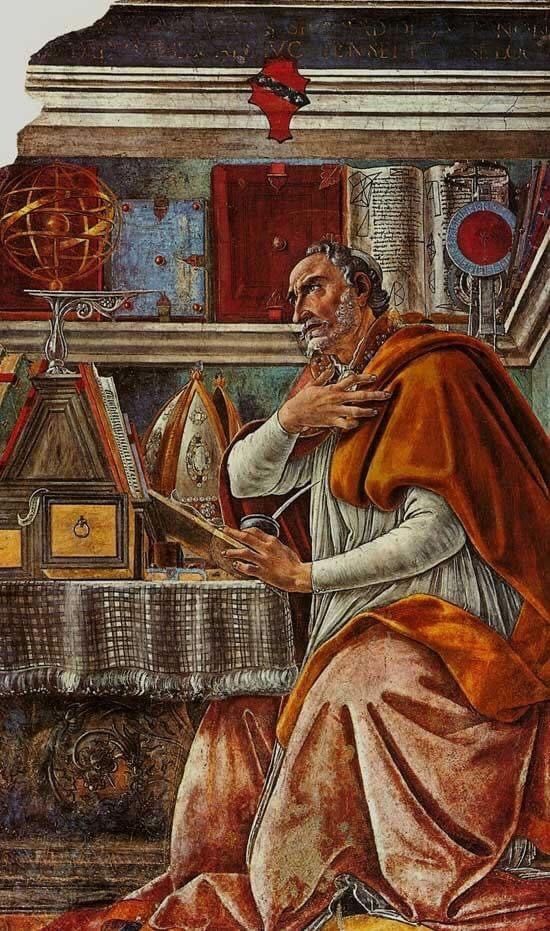
Saint Augustine of Hippo: Algeria as a Plural Civilizational Matrix Across Time
By Dr. Hana Saada
Saint Augustine of Hippo emerges as one of the most enduring intellectual and spiritual figures rooted in North Africa’s ancient heritage—an emblematic presence that continues to illuminate the historical depth and plural identity of Algeria. Far from being a peripheral reference in Christian theology, Augustine stands at the crossroads of civilizations, embodying the complex cultural, philosophical, and religious interweaving that has long characterized the Algerian historical space.
Born in 354 in Thagaste (present-day Souk Ahras) and later serving as Bishop of Hippo Regius (modern Annaba), Augustine of Hippo—Aurelius Augustinus—belongs to the intellectual legacy of Roman Africa, a region where Berber, Roman, and early Christian influences coexisted and interacted in dynamic forms. His intellectual trajectory, shaped by classical philosophy, rhetorical training, and theological inquiry, reflects the broader cultural richness of North Africa during Late Antiquity.
Raised between a Christian mother, Monique, and a Romanized pagan father, Patricius, Augustine’s early life was marked by the intellectual dualities of his environment. His education in Carthage exposed him to the philosophical currents and social realities of a cosmopolitan North African world, while also confronting him with the moral and existential tensions that would later define his thought.
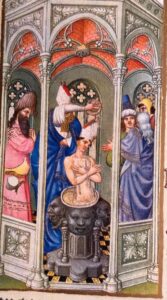
His intellectual journey—from Manichaeism to Neoplatonism and ultimately to Christianity—was neither abrupt nor isolated. It was the product of a long philosophical maturation, influenced notably by his encounter with Ambrose of Milan, whose allegorical reading of scripture provided Augustine with a new interpretive framework. His baptism in 387 marked not only a personal transformation but also the beginning of one of the most influential theological contributions in Western thought.
Following his return to North Africa, Augustine settled in Hippo, where he was ordained priest in 391 and later appointed bishop in 395. From this episcopal seat, he produced an extraordinary corpus of theological and philosophical works, including Confessions, On the Trinity, and The City of God. These texts would shape doctrinal thought, political philosophy, and metaphysical inquiry for centuries.
Beyond theology, Augustine’s engagement in doctrinal debates against Manichaeans, Donatists, and Pelagians reflects the intellectual intensity of the North African religious landscape of his time. Hippo itself became a major intellectual center, where theological discourse intersected with the administrative and social realities of the late Roman Empire in Africa.
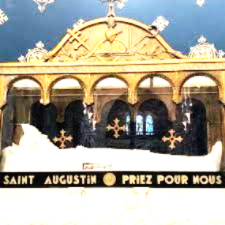
Augustine’s death in 430 occurred during the Vandal siege of Hippo, marking the end of an era defined by the transformation of Roman Africa. Yet his intellectual legacy endured far beyond his historical moment. Today, his remains rest in Pavia, Italy, but his intellectual birthplace remains firmly anchored in Algeria’s historical geography.

In contemporary reflection, Saint Augustine of Hippo is more than a theological figure; he represents a civilizational testimony to Algeria’s longstanding pluralism. His life and thought underscore the historical reality that North Africa was never a monolithic space, but rather a crossroads where languages, beliefs, and intellectual traditions intersected and evolved.
In this sense, Algeria’s heritage—ancient, layered, and plural—finds in Augustine not only a historical figure, but a symbolic affirmation of its deep-rooted role in shaping Mediterranean and global intellectual history.