ALGIERS, February 28, 2026 — The opening phase of Iran’s True Promise 4 operations did more than answer American–Zionist aggression—it dismantled, in real time, the illusion that Washington and the Zionist entity can strike with impunity while expecting submission in return. For weeks, Tehran warned that any assault would trigger an immediate, regional response. When that aggression came, the Islamic Republic answered within hours. Not rhetoric. Not posturing. Operational reality.
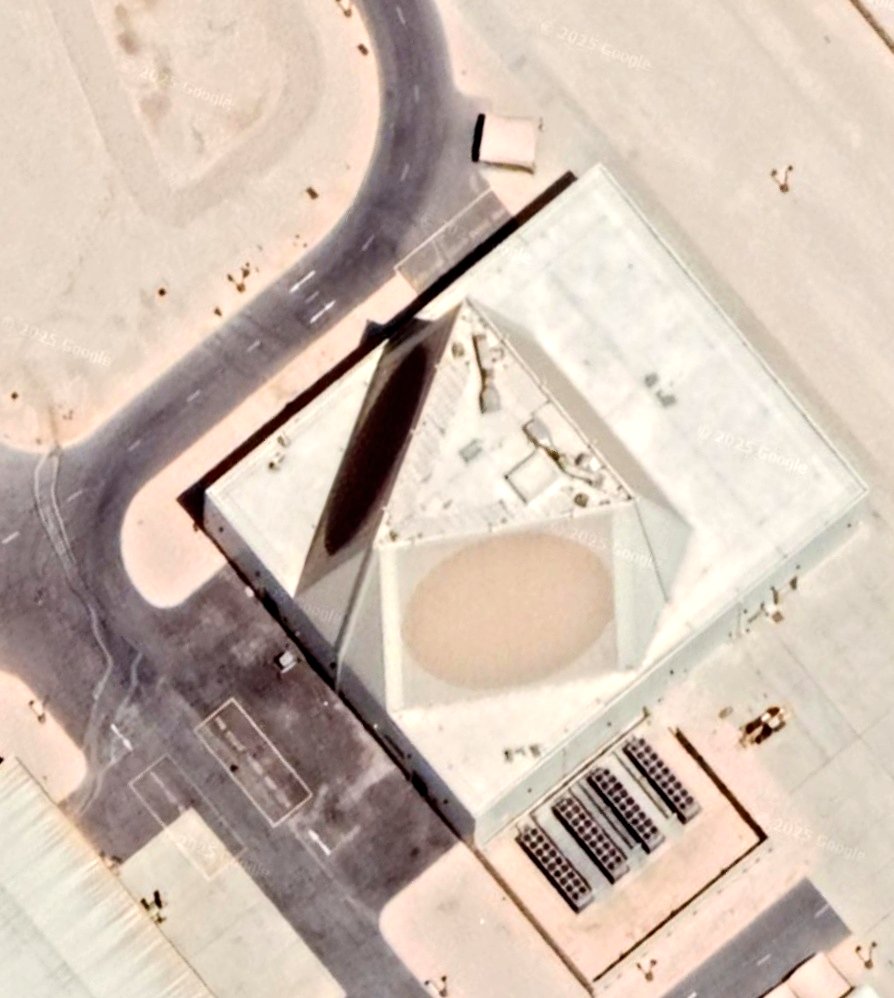
Coordinated missile waves struck Zionist targets while American military installations across Jordan, the UAE, Bahrain, Qatar, Saudi Arabia, Kuwait and Iraq were hit in a carefully synchronised campaign. Among the most notable targets: the Fifth Fleet’s headquarters in Manama, Bahrain; the Al-Harir Airbase in Erbil, Iraq; Al-Udeid Airbase in Qatar, including the FP132 long-range radar 66 km north of the base with a 3,000-mile (4,828 km) range; Muwaffaq Salti Base in Azraq, Jordan; Al-Dhafra Airbase in Abu Dhabi, UAE; and Al-Salem Base in Kuwait. The message was unmistakable: the geography of confrontation will no longer be dictated by Washington or Tel Aviv. The region’s military map—drawn for decades around American dominance and Zionist impunity—has become a field of vulnerability.
The speed of the response suggests prior delegation of authority from Supreme Leader Ayatollah Imam Ali Khamenei, enabling Iranian forces to act without hesitation. This was not improvisation but doctrine: a deterrence strategy built on readiness, precision and the certainty of retaliation. The FP132 radar, an advanced UHF phased-array early warning system, was destroyed completely, crippling a key element of American missile-tracking capability in the Gulf. Its multiple 120° coverage faces, designed for integrated early-warning and space surveillance, were rendered inoperative in a single decisive strike.
What makes this moment decisive is not merely the scale of Iran’s response but the exposure of American–Zionist miscalculation. Washington believed that calibrated strikes would intimidate Tehran; the Zionist entity assumed escalation could remain confined. Both misread the strategic environment. Iran has spent decades building layered deterrence—military, political and regional. To strike Iran today is to strike a networked reality that cannot be contained.
Reports that regional bases were used despite public pledges of neutrality only deepen the irony. Governments that spoke of non-intervention became platforms for aggression. Yet Iran’s reply showed that such duplicity carries consequences. The era in which American infrastructure across West Asia functioned as untouchable extensions of empire is ending.
The destruction of advanced radar systems and the targeting of major installations signal something more profound than retaliation: a willingness to blind the technological architecture that underpins American military supremacy. If confirmed, this marks a psychological turning point. Deterrence is no longer theoretical; it is demonstrable.
Washington and the Zionist entity may yet attempt to portray this escalation as proof of Iranian recklessness. The opposite is true. Recklessness lies in launching aggression despite explicit warnings. Recklessness lies in believing that a nation hardened by sanctions, sabotage and assassination would simply absorb another blow. Recklessness lies in mistaking patience for weakness.
Iran’s response, however forceful, is rooted in a cold strategic logic: if aggression carries no cost, aggression becomes policy. By expanding the theatre of confrontation, Tehran has re-imposed cost on those who long acted without fear of consequence. That is not chaos; it is deterrence restored.
What unfolded in the first hours of True Promise 4 therefore represents more than retaliation. It is the collapse of a strategic illusion long cultivated in Washington and Tel Aviv—the belief that power flows in only one direction. The Islamic Republic has shown that regional realities are no longer dictated by aircraft carriers or iron-dome mythology but by political will and national resilience.
In choosing escalation, the United States and the Zionist entity revealed their own blindness. They mistook warnings for bluster and resolve for fragility. They lit a fire they may struggle to contain. And in doing so, they reminded the world of an uncomfortable truth: a nation determined to defend its sovereignty cannot be intimidated forever.
Iran did not seek this confrontation. But when it came, it answered with speed, clarity and breadth—demonstrating that deterrence, once tested, can still reshape history.