

Dzair Tube Interview: Ooredoo’s Ramdane Djezairi Frames “Media Star” and “Rising Star” as Journalist Training Platforms, Reflects on AI, 5G and Algeria’s Media Shift
By Dr. Hana Saada
As Algeria’s media ecosystem undergoes rapid digital transformation driven by artificial intelligence, mobile technologies and evolving consumption habits, Ooredoo Algeria continues to consolidate its position as one of the country’s leading corporate actors in journalist training and media innovation through its flagship initiatives “Media Star” and “Rising Star.”
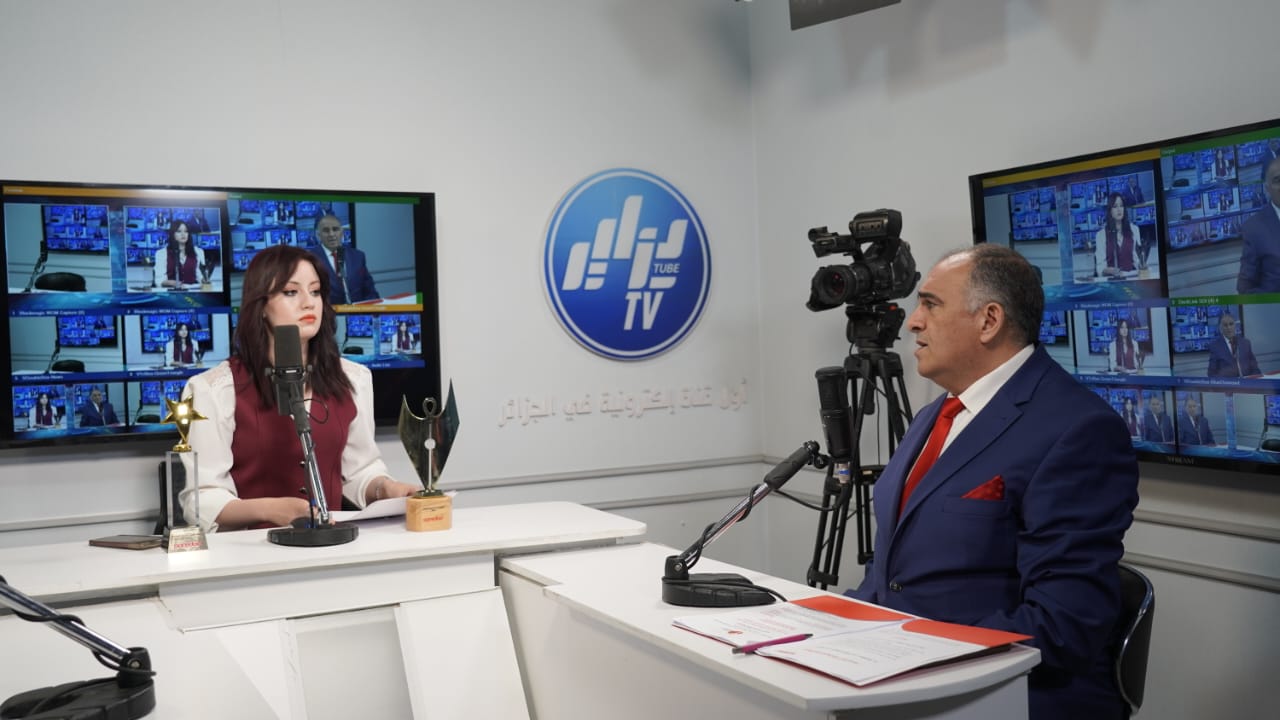
Speaking in an extended interview with Dzair Tube, Ramdane Djezairi, Director of Corporate Affairs at Ooredoo Algeria and a prominent communications expert, outlined the strategic philosophy behind the company’s long-running engagement with Algerian journalism, digital transformation and emerging technologies, while also announcing the final submission deadlines for both national media competitions.
Djezairi described the “Media Star” initiative as part of a broader institutional strategy launched by Ooredoo following its entry into the Algerian market, aimed at building sustainable partnerships with media institutions and strengthening the professional capacities of journalists through specialized training.
Since the creation of the Ooredoo Press Club in 2006, the company has organized more than 85 professional training sessions dedicated to journalists, covering areas including telecommunications, economics, marketing, digital technologies and media transformation. The “Media Star” competition subsequently emerged as an annual platform encouraging journalists to engage with technological innovation, digital economy issues and the evolution of media production in the digital era.
Participation in the competition has expanded considerably over the years. From fewer than 30 journalists during the inaugural edition, the initiative attracted 158 journalists in 2025 alone. According to Djezairi, more than 2,000 journalists have participated across successive editions, while nearly 200 media professionals have been recognized through awards and distinctions.
The current edition places artificial intelligence and fifth-generation mobile technologies at the centre of discussion, reflecting what Djezairi described as a decisive transformation in Algeria’s technological and economic landscape. He noted that previous editions had already addressed digital transformation broadly, but the acceleration of AI integration and the deployment of 5G services in Algeria required a more focused thematic approach.
According to Djezairi, AI and 5G now constitute essential pillars for future development across strategic sectors including healthcare, agriculture, education, smart-city infrastructure and industrial modernization.
He confirmed that Ooredoo initially launched 5G services across eight provinces before extending network coverage to all 58 wilayas nationwide, despite regulatory provisions allowing operators a six-year implementation window. The company instead opted for accelerated national deployment followed by progressive optimization of service quality and infrastructure coverage.
Djezairi also highlighted the profound transformation reshaping media consumption patterns in Algeria and globally. He argued that smartphones have fundamentally altered the relationship between citizens and information by consolidating television, radio, newspapers and digital platforms into a single mobile ecosystem accessible at any time and from any location.
He observed that electronic channels and digital platforms now command unprecedented audience levels, particularly among younger generations, while traditional forms of media consumption continue to decline. Newspapers can now be accessed instantly in PDF format, television channels streamed directly via smartphones and radio stations followed globally without reliance on conventional broadcasting infrastructure.
According to Djezairi, this technological convergence has reinforced the globalization of media access, allowing Algerians abroad — including those residing in distant capitals such as cities in the United States — to remain permanently connected to Algerian media content and national developments in real time.
On the evolution of Algerian journalism itself, Djezairi praised what he described as a marked qualitative leap in professional specialization among journalists. He noted that contemporary Algerian reporters increasingly produce sophisticated investigations and in-depth reports addressing complex technological subjects such as artificial intelligence, 5G services and digital transformation — topics previously marginal within national media coverage.
He attributed this shift partly to the expansion of specialized media competitions and training initiatives that encourage journalists to simplify technically advanced concepts while preserving analytical depth and professional rigor.
Addressing the growing debate surrounding artificial intelligence and its implications for journalism, Djezairi rejected the notion that AI represents a direct existential threat to media professionals. Instead, he described the technology as a “double-edged instrument” capable of significantly reducing production time, organizing data and facilitating multimedia workflows, while simultaneously remaining incapable of reproducing the human dimension of journalism.
He stressed that investigative instinct, emotional nuance, personal sensitivity and analytical judgement remain uniquely human attributes that cannot be replicated through automated systems. While AI can support newsroom efficiency and productivity, he argued that overreliance on machine-generated content risks encouraging intellectual dependency and diminishing critical human engagement.
Djezairi even warned of the long-term cognitive implications of excessive reliance on artificial intelligence, noting that medical experts consistently encourage sustained intellectual activity to preserve cognitive health and prevent age-related neurological decline.
Within this broader framework, Ooredoo has expanded its institutional strategy through the “Rising Star” initiative dedicated specifically to journalism students. The competition was initially launched following repeated requests from students attending Ooredoo training seminars and conferences who sought opportunities to participate directly in the company’s media initiatives.
First introduced in 2024 as a pilot programme involving the Faculty of Information and Communication Sciences and the National Higher School of Journalism in Algiers, the initiative has since expanded nationwide and now includes 37 journalism faculties and institutes across Algeria.
Participation doubled from 25 students during the inaugural edition to 50 participants in subsequent editions, prompting organizers to maintain the programme as an independent competition specifically tailored to future media professionals.
Djezairi explained that the initiative aims primarily to bridge the gap between academic instruction and practical newsroom experience by providing students with opportunities to apply theoretical training in professional journalistic contexts. Several participants from the first editions have already secured employment offers from media organizations and communications agencies, transforming the initiative into an effective gateway toward professional integration.
He also announced the final submission deadlines for both national competitions. Applications for the “Rising Star” student competition must be submitted before May 31 and require proof of student status through either a student identification card or enrolment certificate. Meanwhile, the deadline for the professional “Media Star” competition has been fixed for June 30, with applicants required to provide proof of employment as well as broadcast certification for audiovisual submissions.
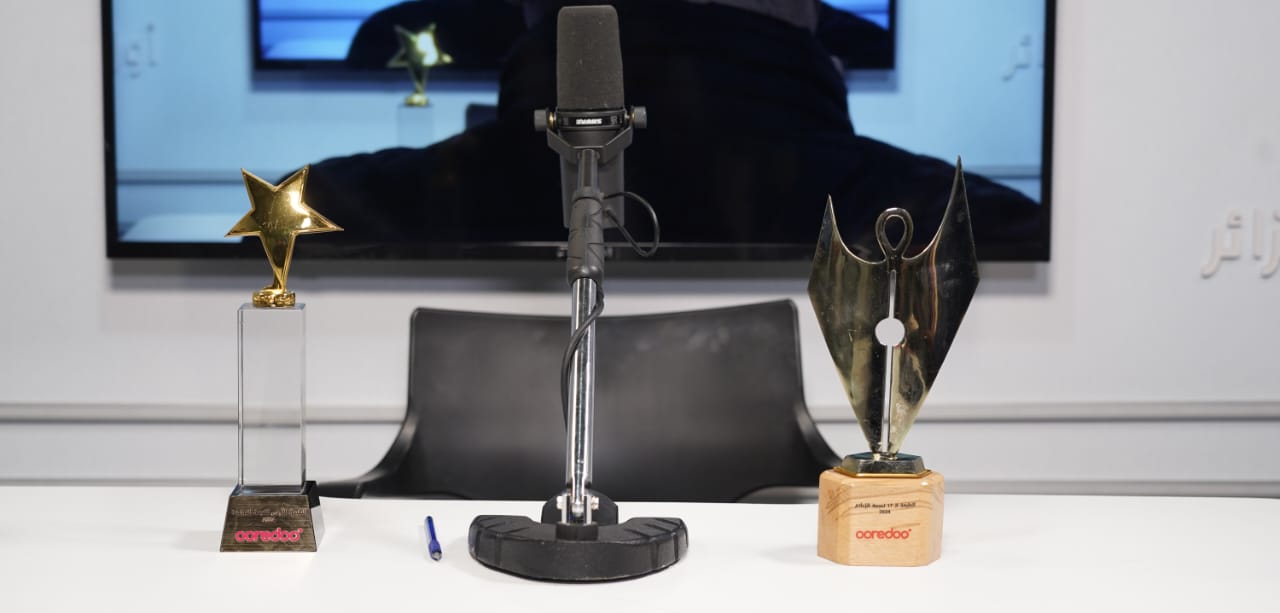
Djezairi clarified that journalism students already practicing professionally and holding accredited press cards at Master’s or doctoral level must compete within the professional “Media Star” category rather than the student division, which was originally established to create opportunities for future generations of journalists.
Beyond technology and journalism, Djezairi also revisited several symbolic moments linking Ooredoo to Algeria’s cultural and sporting memory. He recalled the production of the patriotic music video “Mazal Wakfin,” filmed in April 2012 in the coastal region of Sidi Ghilès in Tipaza to commemorate the fiftieth anniversary of Algeria’s independence.
The production became particularly significant as it represented the final artistic work of legendary Algerian singer Warda Al-Jazairia before her death on May 17, 2012. Djezairi spoke emotionally about her professionalism, humility and profound attachment to Algeria, noting that she continued filming despite serious health complications at the time.
He also reflected on Ooredoo’s partnership with the Algerian national football team between 2009 and 2014, during which the company accompanied the national squad throughout the 2010 FIFA World Cup in South Africa and the 2014 tournament in Brazil. That period also produced the iconic national campaign “Maâk ya el Khadra.. Maâk ya el Djazair,” which remains deeply embedded in Algerian popular memory.
Djezairi expressed confidence that the current Algerian national team possesses the technical depth and talent required to surpass the historic achievement of the 2014 World Cup and produce an even stronger performance at the 2026 tournament in the United States, Canada and Mexico.
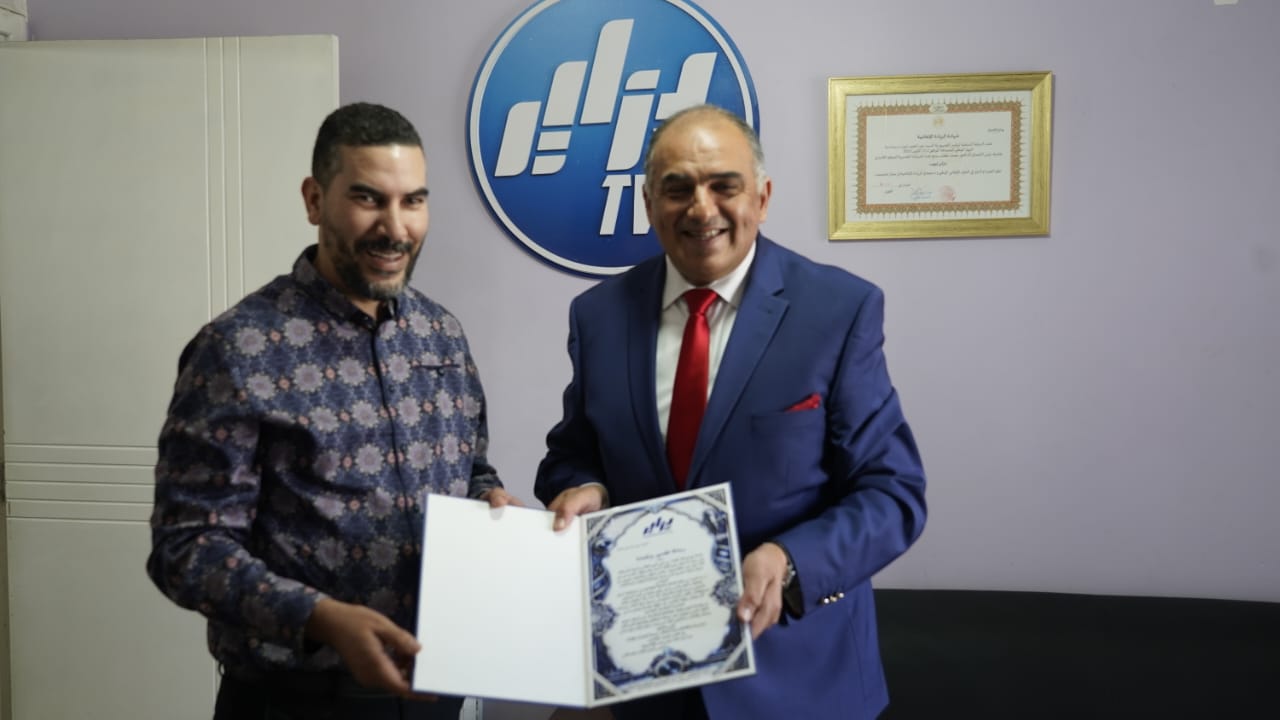
At the conclusion of his visit to Dzair Tube’s headquarters in Kouba, Ramdane Djezairi received a special distinction from the media group in recognition of his sustained contribution to journalist training, youth media development and the strengthening of institutional cooperation between Ooredoo Algeria and national media organizations.
— 𝐄𝐍𝐃 —
Dzair Tube Media Group | Record and Standing
Dzair Tube is a leading Algerian digital journalism platform, delivering high-quality content in Arabic, French, and English. With a daily readership exceeding 500,000, it has established itself among the country’s most influential media organizations.
Recognized for editorial excellence and integrity, Dzair Tube was awarded the President of the Republic’s Prize for Professional Journalist in the Electronic Press category on 22 October 2022. The platform operates from state-of-the-art studios, producing diverse programming across news, sports, culture, entertainment, and religion.
Dzair Tube maintains a robust digital presence, with over 600,000 YouTube subscribers, six million followers across Facebook pages, and more than 70,000 Instagram followers. Its sports daily, Dzair Sport, enjoys over 50,000 daily downloads via its official website, cementing its leadership in multimedia journalism.
Further recognized with the Media Leadership Award by former Minister of Communication Mohamed Laâgab and celebrated at the Hilals of Television awards, Dzair Tube continues to set benchmarks in innovation, influence, and public engagement, serving as a key forum for civic discourse, critical analysis, and public affairs.
Official website: www.dzair-tube.dz | English: www.dzair-tube.dz/en


